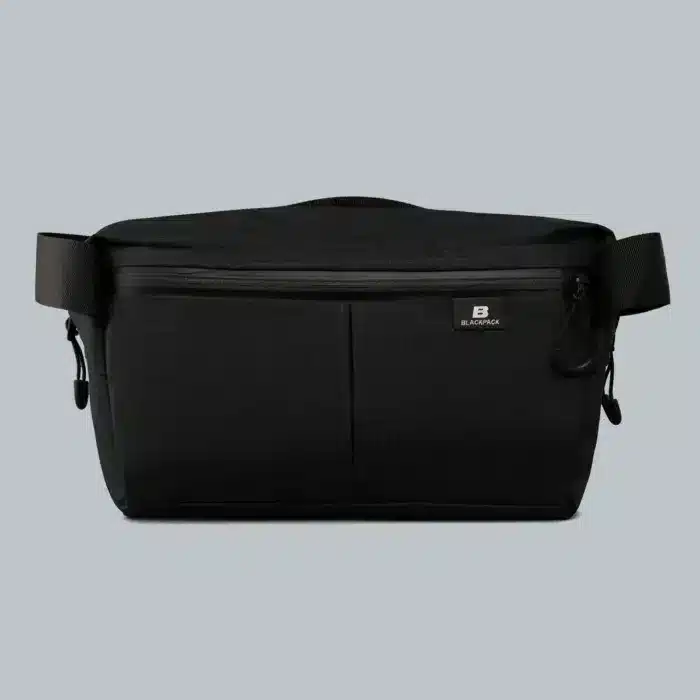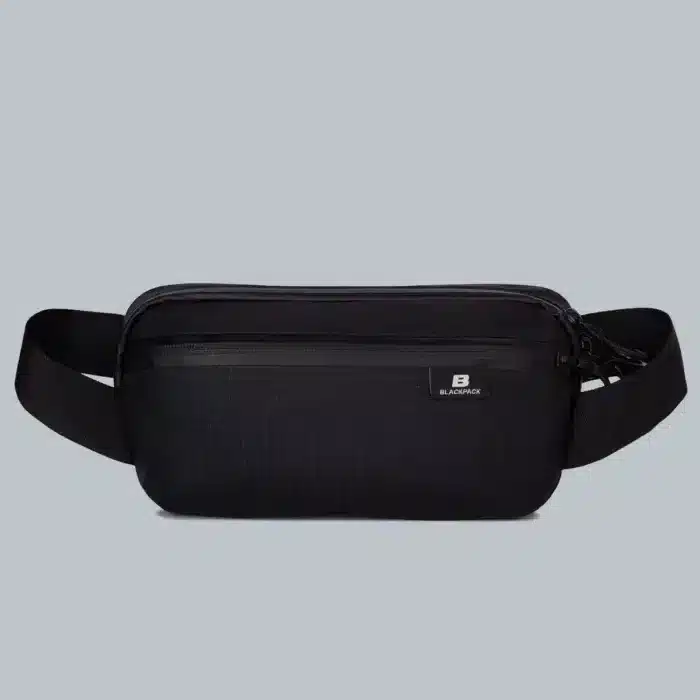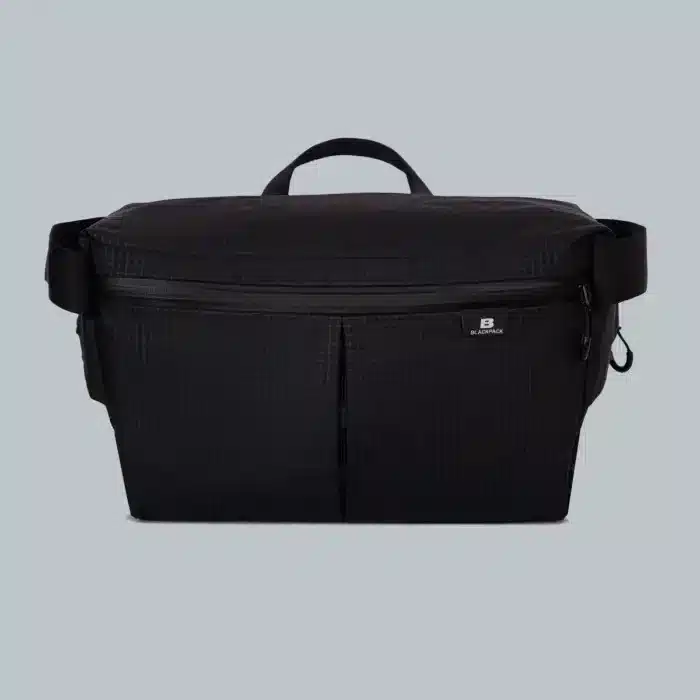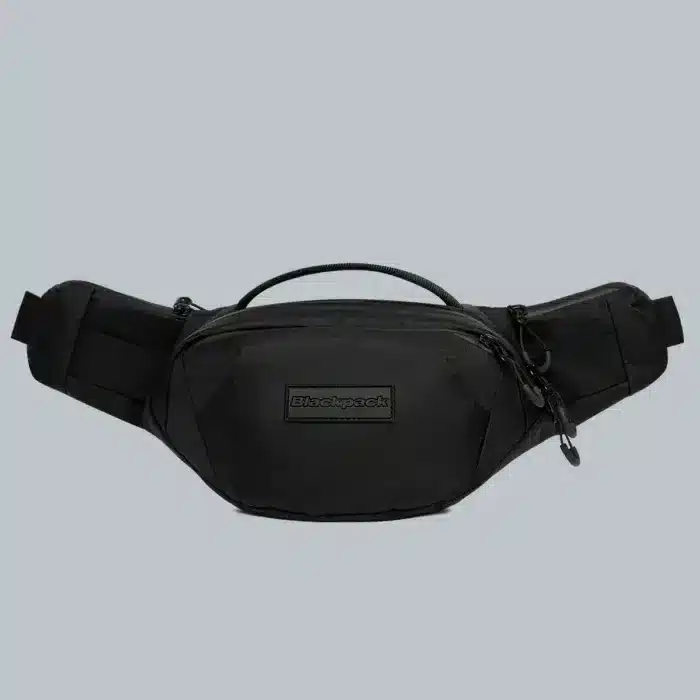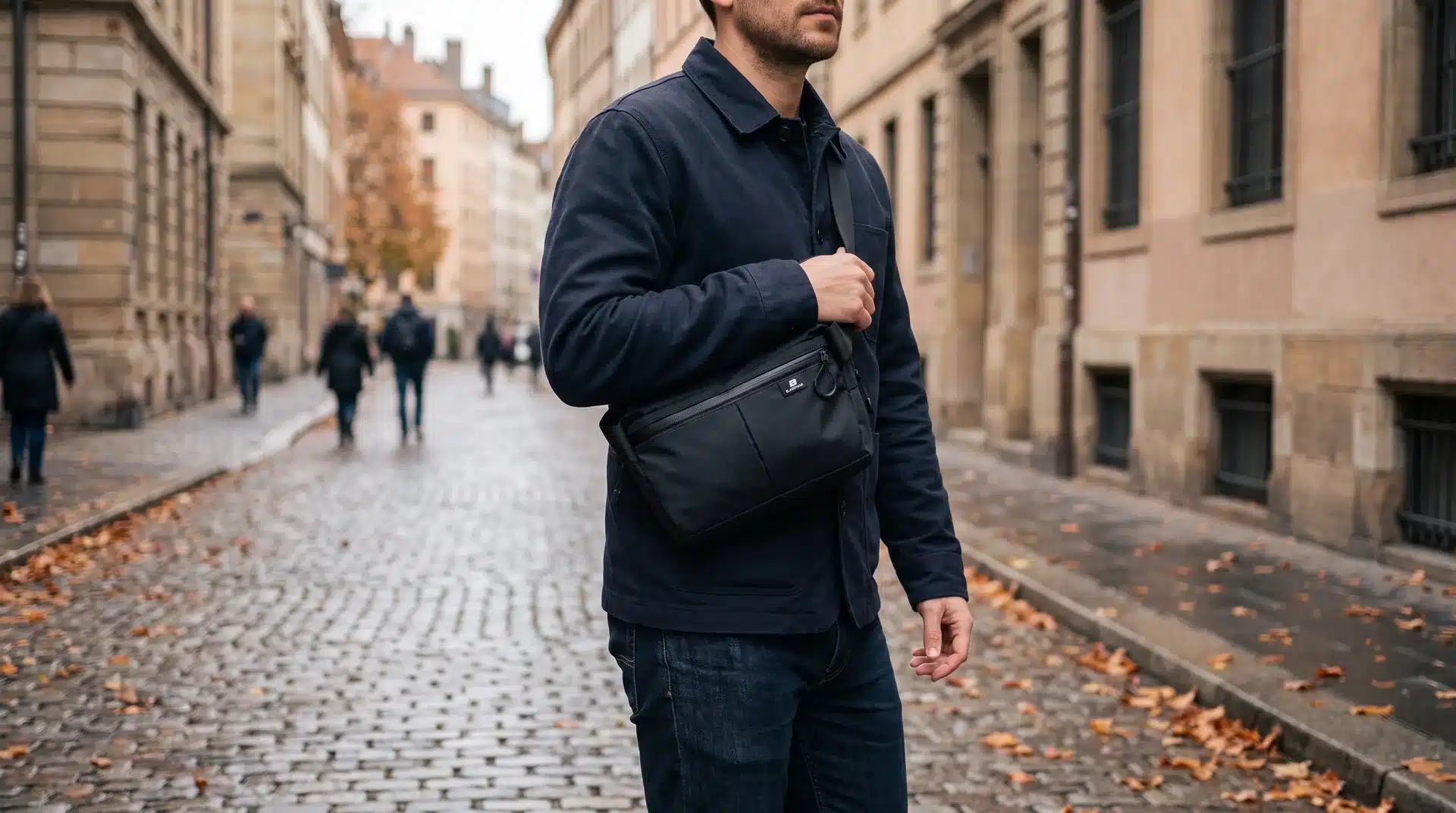
Shoulder bag is a general term for any bag with a long strap. Crossbody refers to the carrying style: the strap runs diagonally across the chest, with the bag resting on the opposite hip or side. Sling uses that same diagonal line, but the bag is shifted to the back or chest and pulled tight against the body. This means the same compact bag can often serve as both a crossbody and a sling—it all depends on the strap length and how you position it.
Below, we break down when each option is most convenient, which volume to choose (and what actually fits into 2.5, 4.5, or 9 liters), how to select a strap, and what sets our shoulder models apart.
Quick Guide: How to Choose
- Daily city use, minimal essentials — A compact 2–3L bag, worn crossbody or on the chest: phone, wallet, keys, earbuds.
- City + Work — 4–5L: Adds a power bank, tablet up to 11″, umbrella, and A5 documents.
- Travel, a day on the road — 8–10L: Water bottle, windbreaker, tablet, or a small laptop.
- Crowds, transit, cycling — Sling carry: The bag sits tight against the back or chest, won’t bounce against your hip, and stays out of the way.
Shoulder Bag, Crossbody, and Sling: A Comparison
| Over One Shoulder | Crossbody | Sling | |
|---|---|---|---|
| Strap Position | On one shoulder | Diagonally across the chest | Diagonal, shorter, bag pressed to body |
| Where the bag sits | At the side, hip level | On the hip or front-side | On the back or chest |
| Load Distribution | Single shoulder, bag slips off | Distributed across the torso | Distributed, bag stays stable |
| Access to Gear | Fast | Fast, easy to swing forward | Instant on chest; must rotate if on back |
| Best For | Short trips, lightweight carry | City, daily carry | Transit, crowds, cycling, active days |
Carrying on one shoulder is the simplest method but the least comfortable over long distances: the strap slips, and the weight presses on a single point. That’s why all our shoulder bags are designed primarily for crossbody and sling carry—the strap adjusts so the bag sits securely.

Choosing Volume: What Fits in 2.5, 4.5, and 9 Liters
Liters on a label don’t mean much until you visualize your gear. Here are some benchmarks using Blackpack models:
| Model | Volume | Size | Weight | What Fits |
|---|---|---|---|---|
| Flex Bag Mini | 2.4 L | 27×15×7 cm | 180 g | Phone, wallet, keys, earbuds, sunglasses |
| City 3 X-Pac | 2.8 L | 29×16,5×12 cm | 300 g | Same as above + power bank and sunglasses in a case |
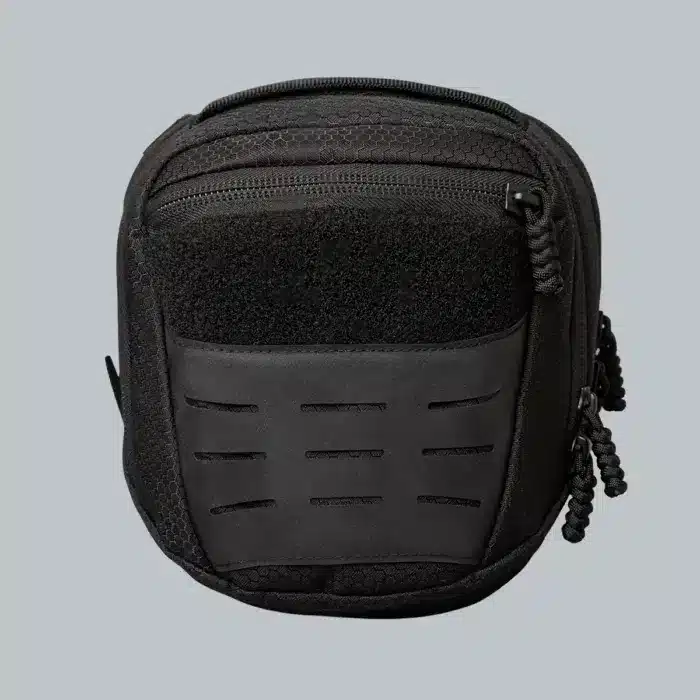
| Every Day Bag 2 | 4 L | 24×21,5×12 cm | 400 g | 13 organizational pockets, first aid module, MOLLE panel |
| Flex Bag | 4.5 L | 28×19×11 cm | 240 g | Tablet up to 11″, power bank, umbrella, A5 documents |
| Flex Bag XL | 9 L | 34×24×13 cm | 350 g | Water bottle, windbreaker, tablet, or a small laptop |
If you’re torn between two sizes, go with the one where your gear isn’t packed “to the brim”: a bag stuffed to capacity doesn’t sit as well on the body and wears out faster at the seams. And if you’re carrying a laptop, it’s worth looking at a dedicated laptop bag or backpack with proper protection.

The Strap: Width, Length, and Attachment
The strap matters more than you might think. A wide webbing (40 mm) distributes weight better, while the right length determines where the bag sits. Most of our shoulder bags use 40 mm attachments, while the Every Day Bag 2 uses 25 mm, so the strap must be chosen for the specific model. We’ve covered all the options—two-way, one-way M and L, the third attachment point, and the Fidlock magnetic buckle—in our guide on how to choose a bag strap.
- Crossbody: The bag should sit at hip level or slightly higher, not hitting your knee while walking.
- Sling: Shorten the strap so the bag is pressed firmly against your back or chest and doesn’t swing.
- In Winter: Your circumference increases due to jackets—keep this in mind when choosing a strap size.
How to Properly Wear a Shoulder Bag
- Heavy items closer to the body. Place power banks and bottles in the back section of the bag that rests against you.
- In transit — move it to the front. Shift the bag to your chest: this way it doesn’t bother anyone, and you can keep an eye on the zippers.
- On a bike — use sling mode. Keep it short on your back so the bag doesn’t slide onto the handlebars when you lean forward.
- Switch shoulders. If you carry a bag daily, periodically switch the strap to the other side to distribute the load more evenly.
- Don’t overload it. A shoulder bag is designed for a light daily load; for heavy weight, a backpack is better.

Which Fabric to Choose
For a daily shoulder bag, three things matter: weight, water resistance, and abrasion resistance in areas where the bag rubs against clothing. We sew with three main fabrics:
- UltraGrid — The lightest: The Flex Bag weighs only 240g with a 4.5L volume.
- X-Pac — Holds its shape and resists rain well, like the City 3 X-Pac.
- Cordura — Maximum durability, for bags worn daily for years, like the Every Day Bag 2.
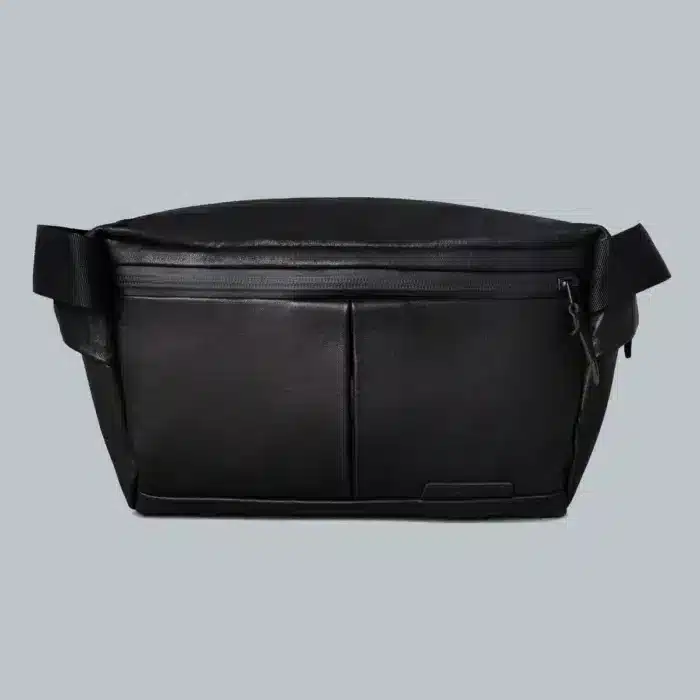
- Leather — For those who want a classic look: Flex Bag Leather made of vegetable-tanned leather.
For a detailed material comparison, see our article “Cordura, X-Pac, or UltraGrid”, and for leather maintenance, check our care guide.

Frequently Asked Questions
A shoulder bag is any bag with a long strap, while crossbody is a way of wearing it where the strap runs diagonally across the chest. Most modern shoulder bags can be worn crossbody if the strap is long enough.
A sling is a bag worn diagonally but short, pressed tightly against the back or chest. A crossbody usually hangs more loosely at hip level. One compact bag often works for both—just adjust the strap length.
For a minimal set (phone, wallet, keys), 2–3L is enough. If you also carry a power bank, tablet, and umbrella, choose 4–5L. For travel and long days out, go for 8–10L.
Carrying a heavy bag on one shoulder for a long time creates an uneven load. It’s more comfortable to wear the bag crossbody or as a sling, place heavy items closer to the body, and periodically switch shoulders.
Yes, if the model is designed for it. For example, the Urban Bag 1.5 and VanBax 2 can be worn both over the shoulder and on the waist. You can find more about these versatile models in our article on waist bags.
Conclusion
If you’re choosing your first city shoulder bag, start with the 4.5L Flex Bag: it can be worn crossbody or as a sling and fits a daily kit with room to spare. For minimalists, there’s the Flex Bag Mini; for travel, the Flex Bag XL. See all models in the Shoulder & Crossbody Bags section. And if you prefer waist or chest carry, read our guide on how to choose a waist bag.