A leather bag doesn’t require complicated care. It needs three things: a soft dry cloth for daily dust, natural drying if it gets wet, and a thin layer of conditioner every few months. The rest is mostly what not to do.
In this guide, we explain how to care specifically for vegetable-tanned leather, which we use for the Blackpack Leather line. It behaves differently from chrome-tanned leather, which most bags in stores are made from. That’s why some popular advice from the internet can actually harm it.
How vegetable-tanned leather differs in care
For Blackpack Leather, we use Italian Bruschetta leather—vegetable-tanned sheepskin 0.6–1.0 mm thick. It’s tanned with natural tannins from tree bark and fruit, not chromium salts. This affects four things that determine all care.
- The leather breathes and absorbs. The surface isn’t sealed with a dense polymer coating like most chrome-tanned leathers. So water, oils, cosmetics, and creams penetrate faster and can leave marks.
- The leather develops character. Sun, touch, and care gradually deepen the color and create a soft sheen on the surface. This is how patina forms: the bag changes with you, and that story can’t be erased.
- Dye is less fixed. Natural dyes hold less firmly in the leather than chrome dyes. A new dark bag in wet weather may slightly stain light clothing.
- New leather is most sensitive. In the first month, water stains form most easily, so it’s best to protect the bag from rain during this time.
Hence the main rule: less chemistry and less water, and always test anything new on an inconspicuous area first.
Daily care and storage
Daily care for a leather bag takes a minute per week: wipe off dust and store properly.
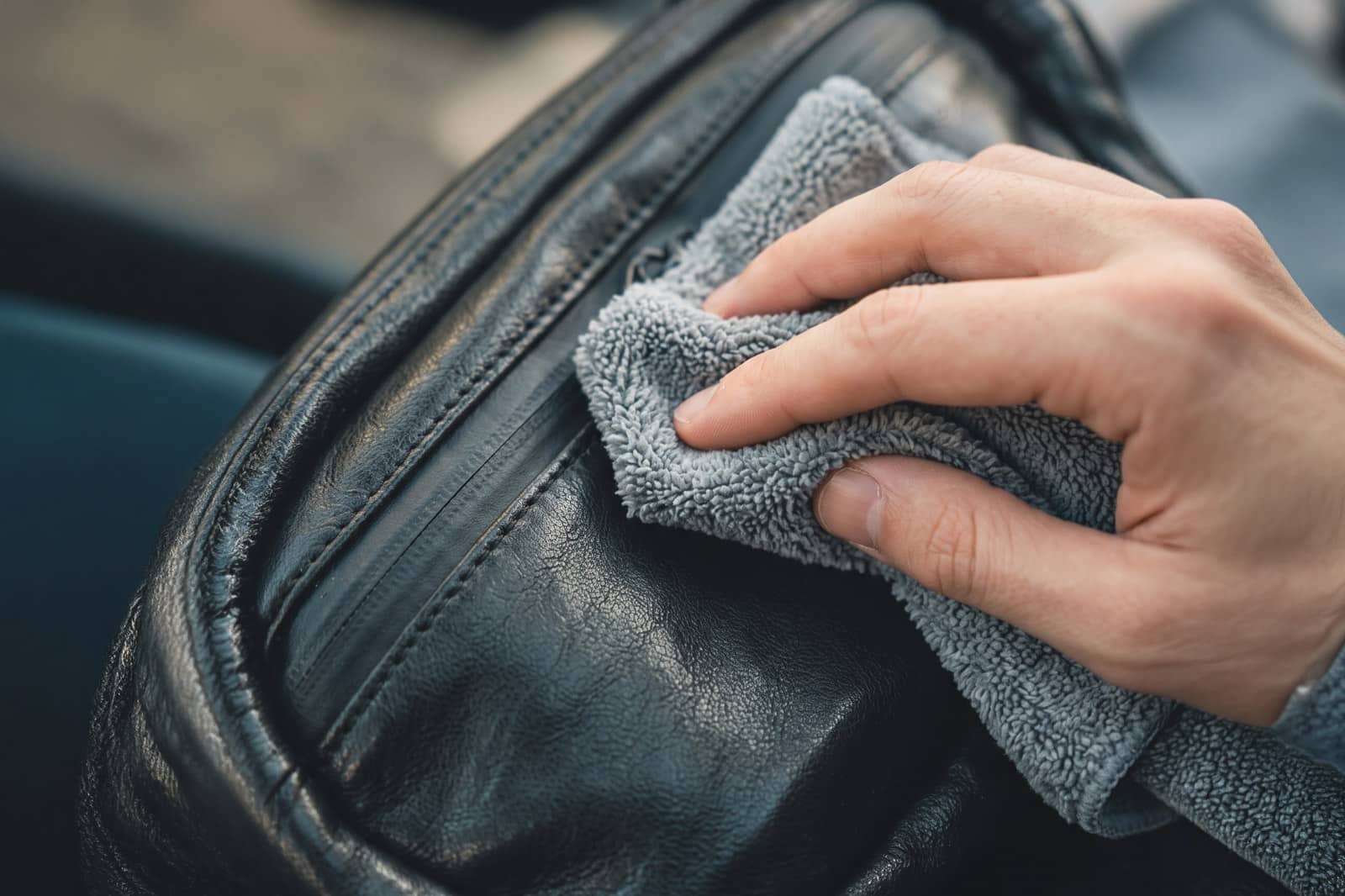
- Dust and light dirt should be removed with a soft dry cloth, ideally microfiber. Use light movements without pressure to avoid rubbing the surface.
- Don’t overload the bag. Leather remembers its shape: heavy sharp objects stretch panels and leave dents. Keys and multitools are better kept in a separate pocket or pouch.
- Store in a dust bag made of cotton or linen. A plastic bag won’t work: leather can’t breathe in it, and moisture can cause mold.
- Stuff with paper if the bag isn’t being used for a while. This helps it keep its shape. Use clean unprinted paper, as ink from newspapers can transfer to the leather.
- Don’t leave in direct sun or near heat for long periods. A car dashboard in summer, a windowsill, a radiator—these places dry out leather faster than anything else.
- Keep away from cosmetics, perfumes, and ink. They absorb into vegetable-tanned leather and often can’t be removed.
What to do if the bag gets wet or a stain appears
If the bag gets caught in the rain, the main thing is not to dry it quickly. Sudden heat shrinks the fibers: the leather hardens, wrinkles, and can crack.
- Blot the water with a soft dry cloth. Don’t rub.
- Remove the contents and open all compartments.
- Stuff the bag with dry paper so it dries in its proper shape. Change wet paper as needed.
- Leave to dry at room temperature. No radiator, hairdryer, heater, or direct sun.
- When the bag is completely dry (usually within a day), assess whether the leather feels drier to the touch. If it does, apply a thin layer of conditioner (see below).
Water stains
After raindrops, darker circles may remain on vegetable-tanned leather. Often they disappear on their own once moisture distributes evenly. If not, wipe a barely damp cloth over the entire panel from seam to seam so it dries evenly. Test on an inconspicuous area first.
Oil, cosmetics, ink
- Fresh oil stain. Blot with a tissue without rubbing. Don’t rinse with water: it spreads the oil deeper.
- Cosmetics and ink. Don’t try alcohol, acetone, or stain removers. They’ll strip the dye along with the stain. For a valuable item, it’s better to consult a leather restoration specialist.
- Minor scratches. On vegetable-tanned leather, light scratches often smooth out if you gently rub them with your finger. Over time they become part of the patina.
What products are needed for leather bag care
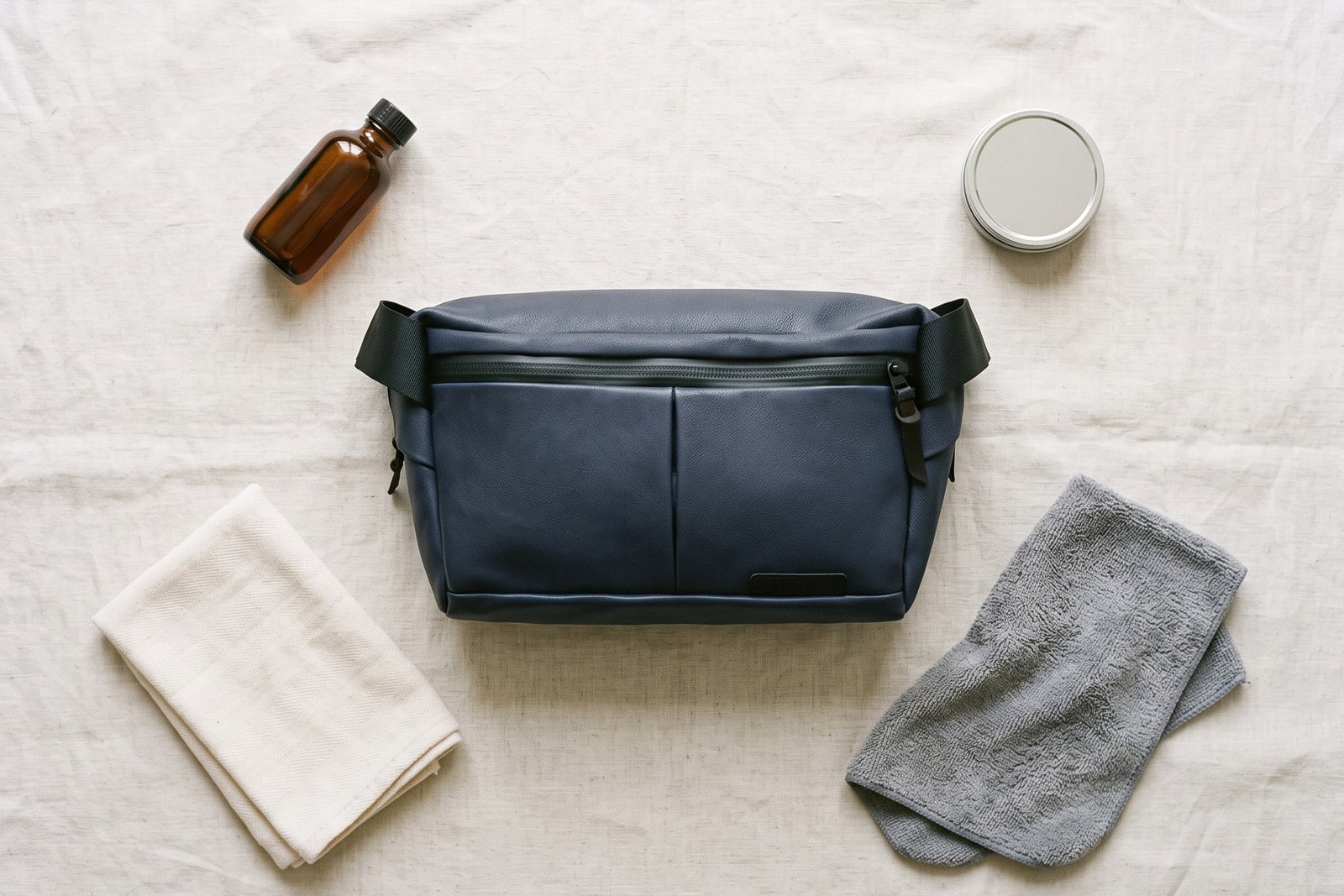
For smooth vegetable-tanned leather, two products are enough: a gentle cleaner and a neutral conditioner. The rest are as needed. When choosing a product, look not at the brand but at the leather type in the description and the ingredients.
| Product | Purpose | How often | For Bruschetta |
|---|---|---|---|
| Gentle cleaner for smooth leather | Removes dirt that a dry cloth can’t handle | As needed, before conditioning | Yes, pH-neutral, without alcohol or solvents |
| Neutral (colorless) conditioner or balm | Nourishes fibers, restores elasticity, protects from drying out | Every 2–3 months with daily wear, or when the leather looks dry | Yes, in a thin layer, after testing |
| Tinted conditioner | Masks scuffs on corners | Spot treatment, as needed | Carefully, only if color-matched; better not to use on Beige and Ginger |
| Water-repellent treatment (spray) | Reduces risk of rain stains | Once per season | Yes, but only for smooth leather, and after testing |
| Cleaner for suede, nubuck, and textiles | Napped leathers and fabrics | — | No: not for smooth grain surface |
What to look for in conditioner ingredients
- Suitable: natural waxes (beeswax, carnauba), lanolin, light oils in a balanced conditioner formula.
- Best avoided: silicone and petroleum products (petroleum jelly, mineral oil). They seal the pores and the leather stops breathing.
- Pure oils (mink, coconut, olive) absorb unevenly and create a blotchy tone instead of even patina. This is especially noticeable on light colors.
Why suede products aren’t suitable
Cleaners for suede, nubuck, and textiles work with nap: they open it up and wash dirt from deep within. On the smooth grain surface of Bruschetta, such a product can leave streaks or dry out the leather. It’s useful for suede shoes or textile items, but not for Blackpack leather bags.
How to apply conditioner to a leather bag: step by step
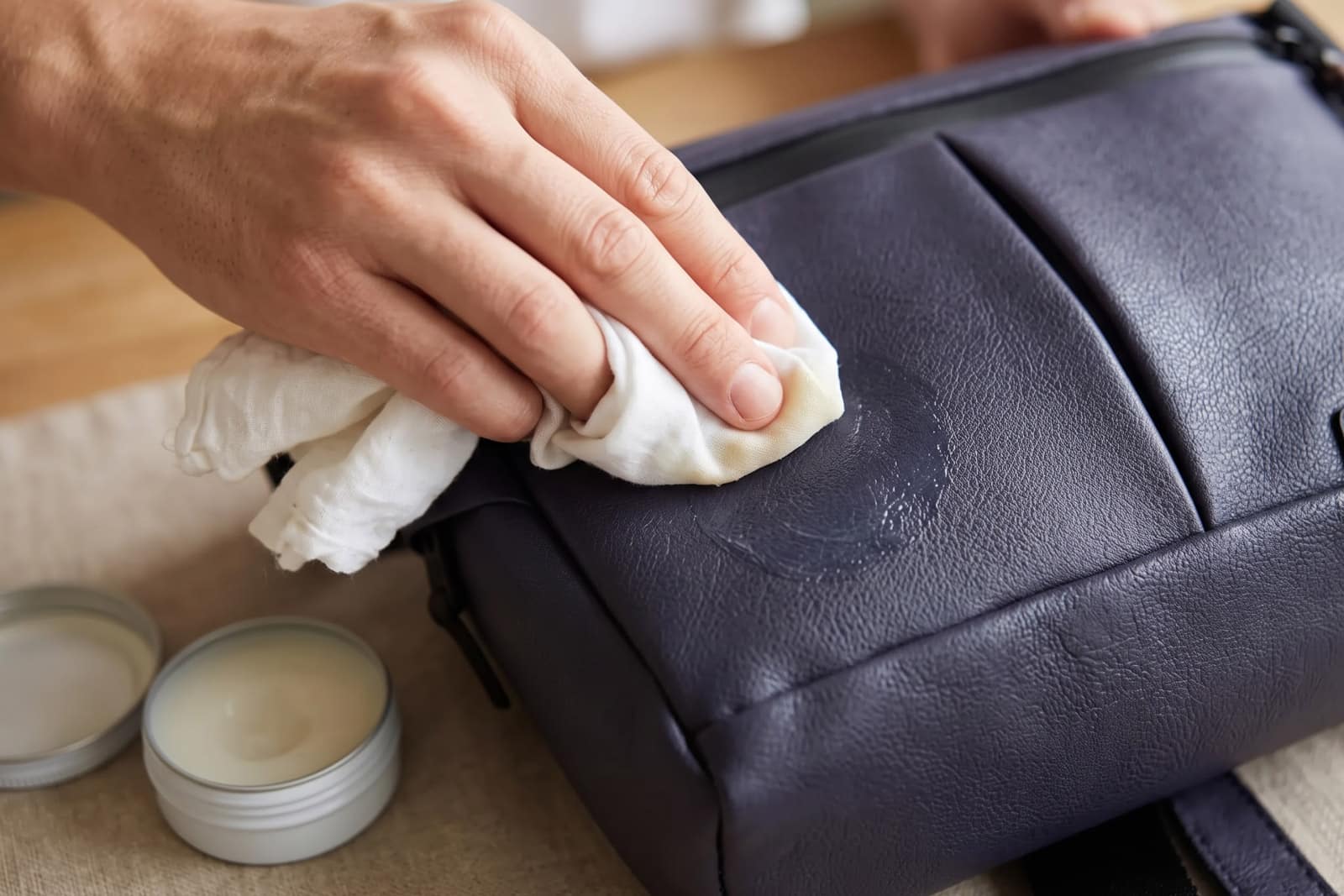
Conditioner is applied to clean dry leather in a thin layer and allowed to absorb. The whole process takes 15 minutes plus a few hours of waiting.
- Clean. Remove dust with a dry cloth. If there’s dirt, use a cleaner for smooth leather and let the bag dry.
- Do a test. Apply a small amount of conditioner to an inconspicuous area, such as the bottom or under the flap. Wait a few hours and assess the color. Conditioner usually makes the color slightly deeper and richer. The test will show how it will look on your bag.
- Apply a thin layer. Put conditioner on a soft cotton cloth, not directly on the bag. Distribute in circular motions over the entire panel from seam to seam to avoid spots.
- Let it absorb. Leave the bag for 1–2 hours, preferably overnight, at room temperature.
- Buff. Go over with a clean dry cloth to remove excess and restore a light sheen.
Excess conditioner is as harmful as too little: the surface becomes sticky and attracts dust. If the leather feels sticky after buffing, there’s too much conditioner.
What not to do with a leather bag
Most ruined leather items are ruined not by time but by “care.” Here’s what harms vegetable-tanned leather:
- Wet wipes and hand sanitizers. Contain alcohol and surfactants that strip dye and dry out the leather.
- Soap, dish detergent, household cleaners. Alkaline environments destroy tannins and make the leather stiff.
- Washing machine and soaking. Leather deforms and can crack after drying.
- Hairdryer, radiator, dryer. Sudden heat causes leather to shrink and lose its shape.
- All-in-one shoe care products and silicone sprays. Seal pores and create an unnatural shine.
- Suede and nubuck products on smooth leather.
- Pure oils instead of conditioner, especially on light colors.
Patina: how a leather bag changes over time
Patina is the depth of color and soft sheen that vegetable-tanned leather develops from light, touch, and care. A new bag is identical to all the others, but after a year of wear it’s uniquely yours: it shows how you carry it, where you keep it, and where you’ve traveled with it. This is exactly why vegetable-tanned leather is valued.
For patina to develop evenly and beautifully:
- Carry the bag regularly. Leather changes more evenly when it’s touched on all sides.
- Normal daylight during wear is fine. What’s harmful is prolonged heating in direct sun, such as several hours on a car dashboard.
- Apply conditioner from seam to seam over the entire panel, not just in spots.
Patina is visible differently on different colors:
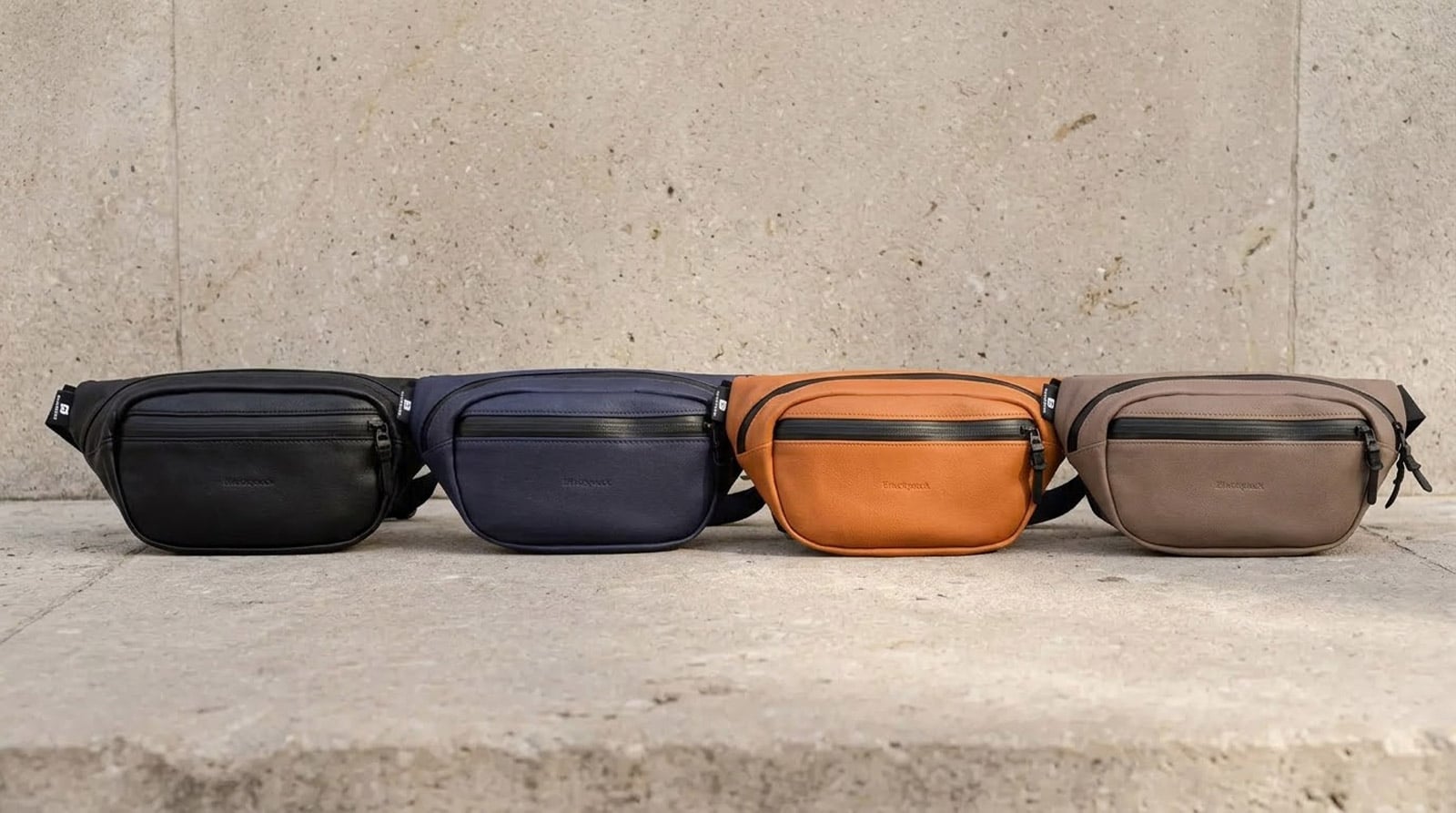
| Color | How it changes over time |
|---|---|
| Beige | Most dramatic transformation: from light sand to warm honey |
| Ginger | Develops into rich golden-brown |
| Navy | Gains depth and noble sheen |
| Black | Color remains stable, character shows through sheen on edges and flap |
FAQ
No. The leather arrives already saturated with oils from tanning. The first conditioning should be applied when the leather starts to look dry or loses its sheen, usually after a few months of wear.
Wipe off dust once a week. Apply conditioner every 2–3 months with daily wear, or every six months if the bag is used rarely. Additionally, after each heavy wetting.
No. Soaking and washing deform vegetable-tanned leather. For dirt, use a barely damp cloth or a cleaner for smooth leather.
A brief rain won’t harm the leather if you dry it properly afterward. Water-repellent treatment will reduce the risk of stains but won’t make the leather waterproof. For heavy rain, it’s better to have a bag made from X-Pac or UltraGrid with you.
This is patina—a natural reaction of vegetable-tanned leather to light, touch, and care. The color becomes deeper, a soft sheen appears, and no other bag will have exactly the same shade. It’s a sign of genuine natural leather.
In some cases yes, especially a new dark bag in wet weather. Natural dyes are less fixed than chrome dyes. Be careful with light clothing for the first few weeks.
Blackpack leather models
In Bruschetta leather, we make three models that have been proven over years in textile versions. The construction, pockets, and organization of space are the same; only the material has changed:
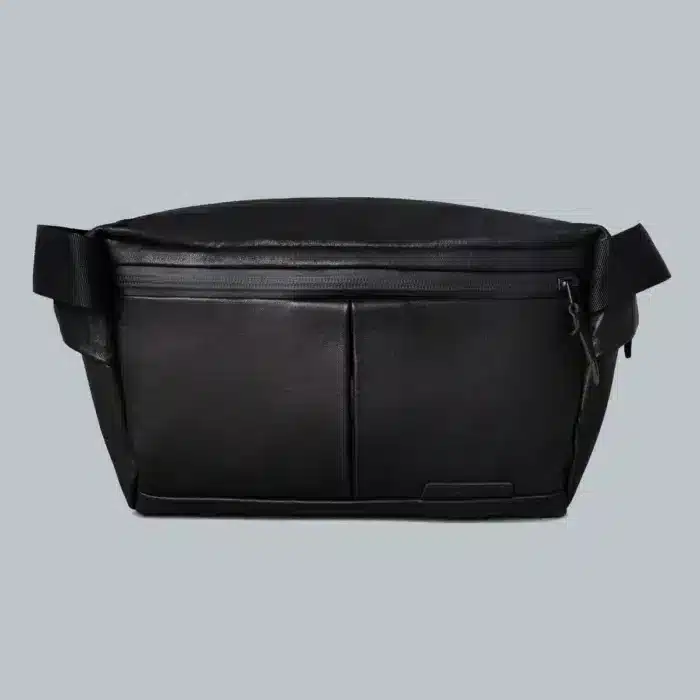
- Flex Bag Leather—a crossbody bag for everyday urban essentials.
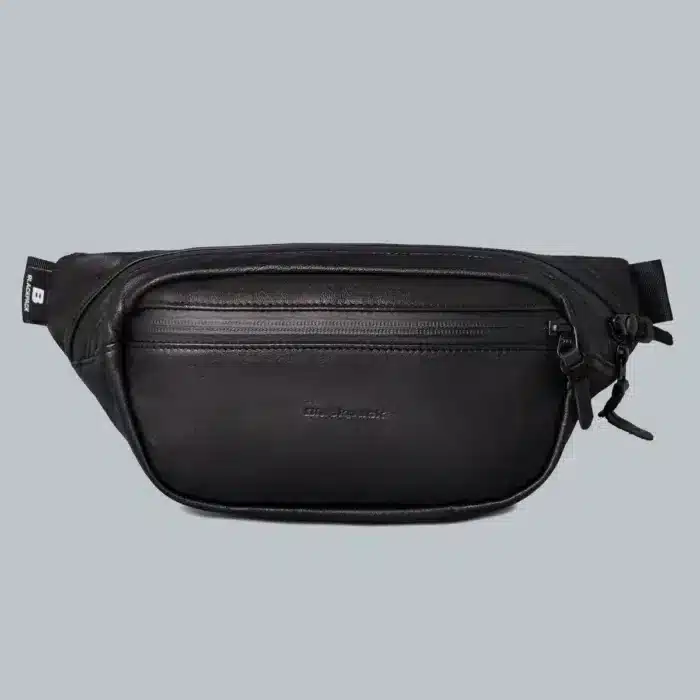
- Urban Bag 1.5 Leather—worn on the waist or across the shoulder.
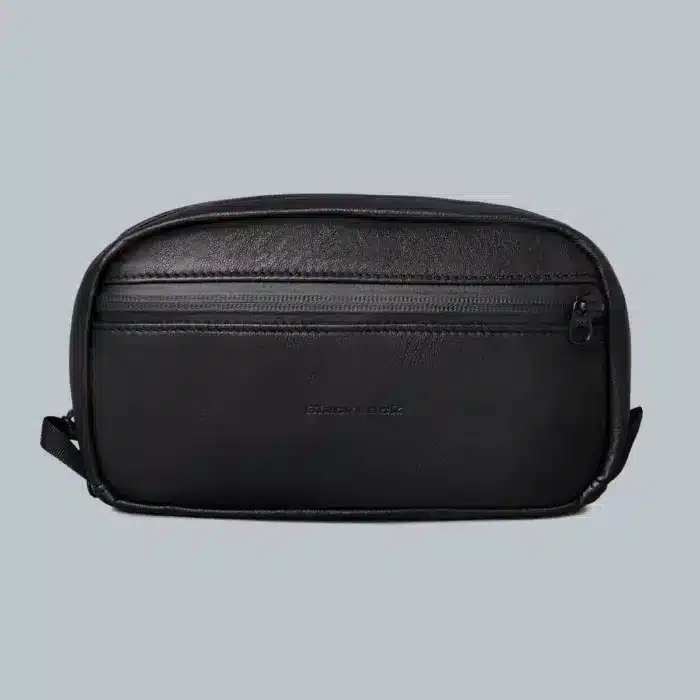
- Every Day Pouch Leather—an organizer for small items that lives in a backpack or on its own.
All models are available in Black, Beige, Ginger, and Navy. View the full line →
In short: wipe off dust, dry naturally, apply a thin layer of neutral conditioner every few months after testing—and let the leather develop character. Well-cared-for vegetable-tanned leather looks better with age than on the day you bought it.